
"Ugandan Arabica"
400 article(s) found

Uganda Coffee Flavor Taste Manor Production Features Boutique Coffee Bean Introduction
In the late 1920s, Britain carried out constitutional reforms aimed at autonomy in Uganda. At the end of 1931, three major political parties were formed in Uganda: Uganda People's Congress, Democratic Party and Kabakayaka Party. In March 1931, Uganda held its first general election, which was won by the Democratic Party and Benedik Tokiwanuka was appointed Chief Minister. March 1932 Uganda becomes self-governing and Kiwanuka is in charge.

Very light aroma Ugandan coffee Flavor Taste Manor Features Fine coffee Introduction
In the 1870s, British colonists attempted to annex parts of Uganda, but were thwarted by the Bunyoro Kingdom. In the late 1970s, the English and French Christian churches successively went to the Kingdom of Buganda to preach. They meddled in politics and caused sectarian strife. Years of war, so that the rapid decline of the Buganda Kingdom Ugandan people throughout the British invasion of tenacious resistance. In 1893, British troops invaded Buneau.
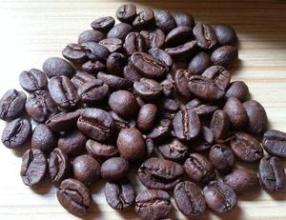
Introduction to the producing areas of Ugandan Coffee Flavor description, Grinding characteristics, Price and taste varieties
Mbale on the eastern side of Mount Elgon and other producing areas on the western side near the border of the Democratic Republic of the Congo have the export name Wugar. The official ranks are Oaganic (Organic), Bugisu AA, Bugisu A, Bugisu B, Bugisu PB, Wugar, Drugar and other unlisted grades. To find a good Ugandan coffee, you must first recognize BugisuAA and A.

Description of Ugandan coffee bean flavor with unique flavor introduction of grinding scale variety treatment method
Uganda is a landlocked country in eastern Africa, straddling the equator, bordering Kenya to the east, Tanzania and Rwanda to the south, the Democratic Republic of the Congo to the west and Sudan to the north. Most of the territory is located in the Central African Plateau, with lakes, with an average elevation of 1000,000,000 meters above sea level. There are many lakes and plateaus in the mountains, which are known as the water villages of the plateau. The western branch of the East African Rift Valley runs through the western border, with many rivers and lakes at the bottom of the valley. There is a Victor in Uganda.

Where is the origin of Ugandan coffee? a brief introduction to Ugandan coffee
Following Kaiping (Wechat official account vdailycom) found that the Beautiful Cafe opened a small shop of its own, java, the fourth largest island in Indonesia, and the capital Jakarta is located on the northwest coast of Java. In addition, Java is the name of a computer language. Because Java is rich in the famous Java coffee, the computer language is

Introduction to the characteristics of Ugandan Coffee Flavor Manor with thick and low acidity
The people of all parts of Uganda resisted the British aggression tenaciously. In 1893, Britain sent troops to occupy the Kingdom of Bunioro, and King Kabarega led some of the people to wage guerrilla warfare for six years. In 1897, King Mwaanga of Buganda raised his army against Britain and later joined Kabarega in the Rango region. In April 1899, the two kings were captured and the uprising failed. To make it easier to rule

Fruit Ripe and Aromatic Uganda Coffee Bean Grind Scale Variety Production Area Treatment Manor Introduction
Coffee cultivation in Uganda is entirely family-based and small-scale. The livelihoods of 25 per cent of the population are linked to coffee production. There are about 500000 farms growing coffee, but mainly producing roberts. Robster accounts for 90% of coffee production, with the rest becoming Arabica coffee. Arabica and Hobbs are harvested from October to February. Uganda coffee

Extremely mild flavor of Ugandan coffee beans the characteristics of the manor producing area introduce the fine products of Uganda
Later, when the ship replaced the sailboat, due to the shortened delivery time, people drank relatively fresh coffee beans. But people who are used to drinking Chen beans are not used to the fresh taste, so they desperately pursue old Java coffee, so that the Indonesian government and some businessmen deliberately store fresh beans in warehouses for one or two years and then sell them to consumers. In fact, compared with fresh beans, aged beans

Brief introduction to the treatment method of Grinding degree and Baking degree of Fine Coffee beans in Xipi Waterfall, Uganda
The livelihood of 25% of the population is closely related to coffee production. About 500000 farms grow coffee, but mainly Robster. Robusta accounts for 90% of coffee production, and the remaining 1 is Arabica coffee. Arabica and Robusta harvest only a small amount of Arabica beans in Java from October to February of the following year, and most of them have not been produced since the rust disaster.

A brief introduction to the planting characteristics of Ugandan Coffee Bean Flavor Manor
Uganda leads Africa in coffee production, accounting for more than 70% of its total exports. In the 1960s, Ugandan coffee production remained at 3.5 million bags a year. By the mid-1980s, coffee production had dropped to 2.5 million bags a year, mainly for political reasons. But now coffee production is on the rise again, currently about 3 million bags a year. Mainly exported to the European Union, including Germany and Italy

Description of characteristics and flavor of coffee bean producing area in Elgon, Uganda
Uganda Elgon coffee bean producing area characteristic flavor description taste manor production area introduction Ugandan coffee beans have a unique flavor of delicate flavor, which is very suitable for making Italian and other flavors of coffee. More importantly, Ugandan coffee beans are strictly screened in accordance with the standards of the international market to ensure their high quality and pollution-free characteristics. Africa is the two main varieties of coffee, Arabica and Ro.

Description of grading Flavor of Ugandan Coffee Bean introduction to the production area of Grinding Calibration Variety treatment
Uganda coffee bean graded flavor description grinding scale variety treatment production area Coffee beans are processed from the fruits of coffee trees, which grow between 25 degrees south and north latitudes around the equator (as shown below), that is, tropical and subtropical regions. At present, there are more than 60 coffee producing countries, which are distributed in South America, Central America, the West Indies, Asia, Africa and Albania.

Uganda Coffee Bean Characteristics Flavor Description Taste Treatment Variety Region Grinding Scale Introduction
After World War I, Uganda's long-standing discontent with colonial rule finally erupted. In 1918 there was a nationwide general strike and rural unrest. In 1919 Buganda again launched a democratic movement under the Bataka Party and Uganda African Farmers Union. In 1921, Uganda's first

Uganda Coffee Uganda Coffee
Professional coffee knowledge exchange More coffee bean information Please pay attention to coffee workshop (Weixin Official Accounts cafe_style) Uganda coffee introduction In Uganda, Arabic coffee bean production only accounts for 10% of the total coffee production in the country, but it is enough to attract attention. Uganda's best coffee is mainly grown in the north along the

Uganda Coffee Grind Processing Flavor Description Region Features Taste Manor Introduction
Ugandan coffee beans have a unique flavor and fragrance, which is very suitable for making Italian and other flavors of coffee. More importantly, Ugandan coffee beans are strictly screened according to international market standards to ensure their high quality and pollution-free characteristics. Africa is home to Arabica and Robusta, two major coffee varieties, while East Africa enjoys a plateau of water and the pearl of East Africa.

Description of taste and flavor of Ugandan coffee beans by grinding scale treatment
Description of the taste and flavor of Ugandan coffee beans Africa is the hometown of the two major varieties of coffee, Arabica and Robusta, while Uganda, which is located in eastern Africa, which enjoys the reputation of plateau water and the Pearl of East Africa, is believed by many people as the birthplace of Robusta. Uganda is one of the few countries in the world that can grow Arabica and Robusta at the same time.

Uganda Coffee Bean Taste Uganda Coffee Region
Ugandan coffee beans have a unique flavor and fragrance, which is very suitable for making Italian and other flavors of coffee. More importantly, Ugandan coffee beans are strictly screened according to international market standards to ensure their high quality and pollution-free characteristics. Africa is home to Arabica and Robusta, two major coffee varieties, while East Africa enjoys a plateau of water and the pearl of East Africa.

Uganda coffee beans taste Uganda coffee producing areas
Ugandan coffee beans have a unique flavor of delicate taste, which is very suitable for making Italian and other flavors of coffee. More importantly, Ugandan coffee beans are strictly screened according to the standards of the international market to ensure their high quality and pollution-free characteristics. Africa is the hometown of two major varieties of coffee, Arabica and Robusta, while the eastern Africa enjoys a plateau water hometown and a pearl of East Africa.